Showing posts with label At the movies. Show all posts

Monday, March 08, 2010

Oscars 2010: Can't anybody here make a good TV show?

If you follow me on Twitter, you know most of my thoughts on last night's Academy Awards telecast. For those who don't (or for those who want to relive the same complaints 12 hours later), a review of the Oscar show coming up just as soon as I hijack my fellow winner's speech...

There are certain stumbling blocks an Oscar-cast simply can't eliminate. First, there are so many awards shows leading up to this one that there's virtually no suspense; Best Picture was the only category most viewers care about where there was any question going into the show what would win, and Best Adapted Screenplay was the only thing close to a major category where the winner was a surprise. (Everyone assumed that award would be the consolation prize for one-time front-runner "Up in the Air.") Second, there are too many awards - or, specifically, too many awards either devoted to either to movies the bulk of the audience hasn't seen (notably the three short-film categories) or to disciplines the bulk of the audience doesn't understand and/or care about (the sound awards, to name two). So the show is destined to either run long (though last night's show still wasn't in the ballpark of the 2002 show for length), feel very rushed at the end (when we get to the categories people actually tuned in for), or both.

Given those inevitable drawbacks, you basically have to grade every Oscar-cast on a curve. But even allowing for the things the producers can't do much to change(*), the 2010 show wasn't very good.

(*) And I thought the little clip reel of previous short-film winners who went on to successful feature-film careers did as good a job as possible of explaining to viewers they those categories exist and are still part of the main show and not the technical ceremony (aka the Nerd Oscars) that someone like Elizabeth Banks or Jessica Biel hosts the week before each year.

Steve Martin and Alec Baldwin weren't terrible hosts, but nor were they particularly memorable. These are two of the funniest men on the planet, but they seemed uncomfortable swapping generic one-liners in the opening monologue, then vanished for long stretches of the show.

Oscar co-producer Adam Shankman's love of musical numbers, meanwhile, seemed to belong in an Oscar telecast of a different era. I liked the idea behind the opening musical number with Neil Patrick Harris and a bunch of showgirls (and/or "So You Think You Can Dance" alums dressed as showgirls) but can't remember the lyrics or melody to any of it the next morning. And the decision to showcase the five nominated scores with interpretive dance numbers was indulgent, incredibly long (especially since the producers had already axed the Best Original Song performances for eating up too much time), silly if you knew anything about the nominated films, and the sort of nonsense I thought the Oscars had left behind when Debbie Allen was banished from the show in the '90s. If you want to play extended parts of the nominated scores, great, but there's a much easier, more germane visual you can use to accompany them: clips of the films.

Still, no matter how tentative the hosts were, how odd some of the production choices were (a random montage of horror movies that seemed unclear on what the definition of a horror movie is, and in some of its choices of Oscar-winning films that were released after "The Exorcist," disagreed with the introductory remarks by Taylor Lautner and Kristen Stewart), or how long the show ran, everything might have been okay with an even vaguely competent director.

Instead, we got Hamish Hamilton making the wrong choice at virtually every turn.

He gave us long shots when we needed something more intimate (for instance, when all the John Hughes movie alums first came on stage at the end of the Hughes tribute), random and confused edits, terrible choices on who to cut to in the audience (anytime "Precious" won, we of course had to see every notable African-American person in attendance, and after spending half the show cutting randomly to a surly George Clooney, nobody could bother when Sandra Bullock told a joke at his expense in her acceptance speech), etc., etc. After everyone screamed bloody murder about the framing of last year's In Memoriam segment, which focused more on Queen Latifah than the images of the movie people who died, what excuse was there to make the exact same mistake for the first few entries in this year's montage? (Unless you were squinting, you may not have even realized Patrick Swayze led things off.) And after giving us shot after shot after shot of former spouses/collaborators Kathryn Bigelow and James Cameron every time one of "The Hurt Locker" or "Avatar" won, how in the world did Hamilton fail to show us their interaction when Bigelow beat Cameron for Best Director?

(Just remember all the bumbling on display when members of the television Academy, living up to their usual inferiority complex towards the movies, give Hamilton an Emmy next fall.)

Some other highlights and lowlights from the show:

• I'm happy for Bigelow, who deserved the win for directing one of the most exciting, yet unconventional, action movies in years, but everything about the presentation of her directing award left a bad taste in my mouth. The choice of Barbra Streisand to present (including Babs' opening remarks about how excited she was at the possibility of a woman winning) and then the orchestra's choice of "I Am Woman" to accompany Bigelow's walk off-stage all screamed that the only thing that mattered about Bigelow's achievement was her gender. Yes, it's long-overdue that a woman won (not that Hollywood gives female directors a ton of great opportunities), but it's insulting to Bigelow's immense talent to focus so much on that.

• One improvement over last year's show: the tributes to the Best Actor and Best Actress nominees came from former co-stars, rather than former winners who may or may not have had a connection to one of the nominees, and we got both performance clips and the testimonials, rather than just the speeches. That made things run longer, and some of the testimonials were still awkward (Colin Farrell invoking "SWAT" for Jeremy Renner, Forest Whitaker reminding people that Sandra Bullock was once in "Hope Floats"), but overall the execution of the idea was much better.

• It was a good night to be affiliated with "Lost." That show's composer Michael Giacchino (whom I profiled a couple of years ago) won the Best Original Score trophy for "Up," Fisher Stevens (who played Minkowski, the radio operator on the freighter in season four) won for producing Best Documentary winner "The Cove," and both of the Best Picture frontrunners featured "Lost" actresses in small roles: Evangeline Lilly in "Hurt Locker" and Michelle Rodriguez in "Avatar."

• Speaking of TV alums at the Oscars, Mo'Nique's win for Best Supporting Actress means that UPN and the WB are, I believe, tied for the number of former stars to win acting Oscars. (Mo'Nique was on UPN's "The Parkers," Jamie Foxx on the WB's "The Jamie Foxx Show.") Unless I'm forgetting someone, who will break the tie? A castmember from "Shasta McNasty" or "7th Heaven"? UPDATE: As mentioned in the comments, Forest Whitaker (who won a few years back for "Last King of Scotland") hosted UPN's "Twilight Zone" remake, so the pressure's on the WB alums now. I say Jessica Biel's due next.

• I'm of the right age for Hughes' movies to matter a lot to me, but I'd understand why viewers outside that demo would wonder why the show spent so much time on this one guy who died and not any of the others. I also hope Matthew Broderick's "Hey, Ferris! This your day off?" impression of the fan encounter he has every day was cathartic for him, and that he can now again embrace his inner Ferris Bueller, given how he's spent so much of his adult career playing pinched, Cameron-esque dweebs.

• Best presenter banter: Tina Fey and Robert Downey Jr. bickering about writers vs. actors. Worst: Probably Ben Stiller coming out in Na'avi makeup was one of those ideas that was funny as a brief sight gag, then kept going and going and going.

• The producers introduced an off-stage "Thank-You Cam" this year that was allegedly supposed to give the winners an opportunity to do their usual deadly lists while doing something more interesting for the viewers at home. It was, unsurprisingly, completely ignored.

What did everybody else think?
Click here to read the full post

Sunday, March 07, 2010

Oscar day open thread

The Academy Awards are tonight, and I know a lot of you will be watching. (Though not, unfortunately, if you live around here and subscribe to Cablevision.)

So feel free to use this post to discuss the films you think will and/or should win in certain categories, and then to discuss the Oscar telecast (including hosts Alec Baldwin and Steve Martin) as it goes along.

The only thing I ask is that we try not to spoil the movies too much while talking about them, okay? Not everybody has seen all the nominees (particularly in a year with 10 Best Picture nods instead of 5), and we can talk about whether, say, "Hurt Locker" or "Inglourious Basterds" deserves a screenplay award without giving away much about pivotal plot points, okay?

Have at it. Click here to read the full post

Tuesday, February 02, 2010

Thoughts on the Oscar nominations?

This isn't a movie blog, but I write about film occasionally enough that I was curious for everyone's reaction to the just-announced Oscar nominations. Because there are so many other awards shows now, the nominees in most of the categories weren't a big surprise. But with the expansion of the Best Picture nominees from 5 to 10, there were a lot of wild cards. (If I had to guess, I'd say that "The Blind Side," "District 9," "A Serious Man," "Up" and "An Education" benefited most from the expansion.)

Of course, the run-up of other awards shows also means there won't be a ton of suspense about who wins, other than perhaps "Avatar" vs. "Hurt Locker" for Best Picture and director, but while we have a few weeks to kill before the big event, what did you think of the nominations? Anyone you hoped/expected to be nominated who wasn't? (For me, it was "500 Days of Summer" for original screenplay.) Any pleasant surprises? (For me, it'd be "In the Loop" for adapted screenplay.) Any nominee you're pulling for, even if they're not the obvious favorite? (I loved Clooney in "Up in the Air," and I'm sure Jeff Bridges is brilliant in "Crazy Heart" and is long overdue, but it'd also be cool to see Jeremy Renner win.)

Have at it. Click here to read the full post

Tuesday, December 29, 2009

At the movies: My 20 favorite films of the '00s

Having run through my favorite TV shows of the decade and the year, and then having invited comments yesterday on your favorite films of '09, I guess the only thing that's left is a movies of the decade list, which follows after the jump...

First, a few caveats. In this decade, I had a kid, started a blog to go with my column-writing, and saw The Star-Ledger's TV department shrink from three people to just me, and those three things drastically cut down on my ability to either go to the movies or watch them on DVD. So there are many movies big and small that I just never got to. Because of that, and because my tastes are idiosyncratic, I want to be clear that I'm not saying these were the 20 best movies of the decade, just my favorite 20 of the films I saw.

Here's how I would sum up "best" vs. "favorite": my favorite movie of all time is "Midnight Run," but I doubt it would crack a list of the 100 "best" movies I've ever seen, if you catch my meaning. The 20 films below (and the handful of runners-up) are a mix of films I think are genuinely great ("Children of Men"), ones that I've watched a million times ("Wonder Boys," which, to be fair, came out in the decade's second month, and so had a head start on the other entries), ones that happen to strongly check a particular box for me ("Miracle"), and some combination of all three ("The Incredibles").

So in alphabetical order, here's the list:

"Almost Famous" - Deeply auto-biographical films can feel self-indulgent (see a later Cameron Crowe film from the decade, "Elizabethtown"), with lots of scenes, characters and storylines thrown in simply with the defense of "this is what happened to me, man!" With "Almost Famous," Crowe told his own story, but it was a great story, and one that turned out to be universal to anyone who's ever been passionate about music, or writing, or, really, passionate about anything.

"American Splendor" - I'm a comic book fan, but I'd never read Harvey Pekar's work until I saw Shari Springer Berman & Robert Pulcini's film, which deftly, hilariously and at times movingly mixed the real Pekar with a bunch of fictional stand-ins, some live-action (most obviously Paul Giamatti, in a performance I liked even better than his work in "Sideways"), some animated. Great work as well from Hope Davis as Harvey's wife, and if the movie had contained nothing but the "Revenge of the Nerds" scene, it might still be on this list.

"Anchorman: The Legend of Ron Burgundy" - The funniest, silliest, most spectacularly quotable movie of Will Ferrell's career. It makes me laugh every damn time, and I like it so much that I've even watched "Wake Up, Ron Burgundy," the straight-to-video "sequel" that's essentially a collection of (understandably) deleted scenes and subplots. Sixty percent of the time, it works every time.

"Before Sunset" - Like many Gen X'ers, this movie caught me right in the sweet spot, as I'm around the same age as Ethan Hawke and Julie Delpy's characters, just like I was for "Before Sunrise." Richard Linklater made what seemed like one of the most unnecessary sequels of all time feel essential and powerful, and now, like many of my bretheren, I hope like hell the trio keep revisiting the characters every 10 or 15 years, "7 Up"-style.

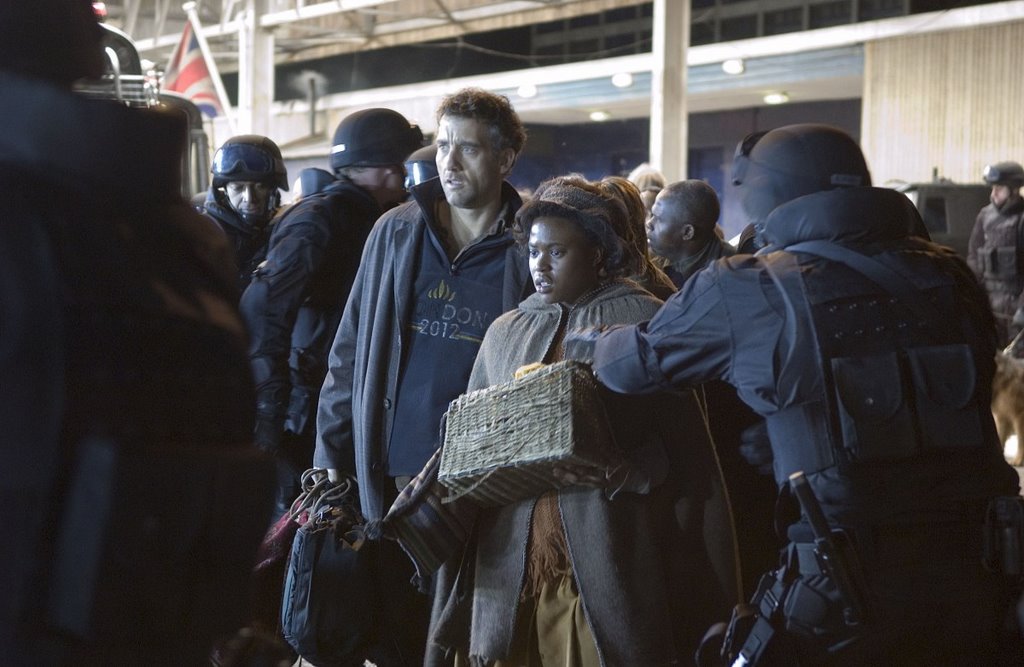
"Children of Men" - Just balls-out filmmaking by Alfonso Cuaron and company - not just the famous tracking shots (like the ambush scene), but the creation of a believable, terrifying dystopian world, the performances by Clive Owen and Michael Caine, the music and the rest.

"City of God" - Foreign language films probably suffered the most in my movie downsizing this decade. The Brazilian "City of God" is one of the few I saw, and I was damn glad. Like "Children of Men," it's a marriage of incredible filmmaking technique (by director Fernando Meirelles and company) with a nightmarish world - only this one is the very real slums of Rio, as seen over several years. Loved the TV spin-off "City of Men" (which Sundance Channel aired a few years back), too.

"The Dark Knight" - The first of several comic book movies on the list, and also the first of three Christopher Nolan movies. In addition to giving us the justly-celebrated performance by Heath Ledger as the Joker, "Dark Knight" also did as good a job as I've seen of a live-action movie showing what it would be like to live in a comic book world, to live in terror of people like the Joker and even Batman himself.

"Eternal Sunshine of the Spotless Mind" - Kate Winslet's best performance in a very good decade for her, a Charlie Kaufman script that managed to marry his usual inventiveness with a real depth of feeling often lacking in his other scripts, and beautiful direction from Michel Gondry. What's not to like? (Other than the fact that Clementine and Joel are probably toxic for each other, that is.)

"The 40-Year-Old Virgin" - Still the best of the Apatow brand of films (both those directed by him and those made by his pals and/or former "Freaks and Geeks" stars). It has a lead performance by Steve Carell so good that it more or less helped save "The Office" (Greg Daniels credits this movie with helping him figure out how to write Michael Scott) and one explosively funny joke or set piece after another. Often imitated, (still) never quite duplicated.

"High Fidelity" - It leaves out a couple of key moments from the Nick Hornby book - Rob refusing to buy the records from the woman with the cheating husband (which is on the DVD as a deleted scene), and Rob and Laura arguing about the mix tapes he always made her - but otherwise Stephen Frears, John Cusack and his screenwriting buddies expertly translate Hornby from England to Chicago. A great (and, whenever Dick or Barry are on-screen, hilarious) meditation on love, be it of music or a woman.

"The Hurt Locker" - I had 19 films set on this list and couldn't pick a 20th. Then I did the post yesterday about the year's best movies, and I just couldn't get "Hurt Locker" out of my head. Among the many things that are cool about it - Jeremy Renner's performance (I can't believe ABC had this guy under contract for a show and let him go), the various action set pieces expertly set up by director Kathryn Bigelow, all the effective cameos - I may be most impressed with how Bigelow and writer Mark Boal managed to make a 100% non-political Iraq War movie. "The Hurt Locker" never asks why we're there; it just accepts that we are, and then goes to show you what that experience is like (terrifying, but also thrilling, mostly) for one specific unit that's there.

"The Incredibles" - I could probably put a half dozen Pixar movies on this list and not blink, but for diversity's sake, I'm going to let my favorite one stand in for all of them. A tremendous superhero movie (and at times spy movie), a great family story, a fantastic commentary on the "Everybody gets a trophy!" mentality our society falls prey to (case in point: my endless Best of the '00s in TV lists), impeccable voice casting and the follow-up I was hoping for from Brad Bird after the wonderful "Iron Giant."

"Kiss Kiss Bang Bang" - A tale of two comebacks. Shane Black had more or less dropped out of the movie business after "The Long Kiss Goodnight," and Robert Downey Jr. was in the midst of another of his troubled, underemployed periods, when the two teamed up for this self-aware modern noir played half-straight, half for laughs, and all of it fun. Val Kilmer hadn't been this good in a long time, and no one has ever used Michelle Monaghan this well before or since. A high rewatchability level, as well.

"The Lord of the Rings" trilogy - Ask me to pick one of the three, and I'll probably go with "Return of the King" (even with the endless epilogues), but everyone seems fine treating them as one single work, so I will, too. I remember going to a critics' preview of "Fellowship" with Matt Zoller Seitz, and when the Balrog came out to battle the fellowship, Matt turned to me with an 8-year-old's smile on his face and whispered, "I'm so happy right now." "Me too," I said back, and I'm sure I was wearing a matching goofy grin. A tremendous technical achievement, but unlike "Avatar" (which I admittedly enjoyed), one that also seemed invested in the more traditional aspects of storytelling like plot and characterization.

"Memento" - The one that put Nolan on the map to make the other two of his films on this list (with a minor bump along the way in the solid-but-nothing-more "Insomnia"). You know a gimmick movie works if it stands up to multiple viewings, and this one does, thanks not only to the clever device that Nolan and his brother used to tell Leonard's story ("I have this condition..."), but the performances by Guy Pearce, Carrie-Ann Moss and Joey Pants. If anything, multiple viewing prove rewarding, as the story only becomes creepier and more tragic once you get out of Leonard's mindset and can remember all the pieces at once.

"Miracle" - The list's token Underdog Sports Movie, it's one I think is really underrated because it was one of a wave of Disney assembly-line sports flicks of the decade. What elevates "Miracle" above the likes of "Remember the Titans" or "The Express" are two things: Kurt Russell giving one of the best, most committed performances of his career as Herb Brooks (jump to the 1:50 mark of this clip and watch how Russell plays Brooks' uncertain reaction to the victory he devoted his whole life, and arguably too much of it, to achieving) and director Gavin O'Connor's long recreation of the Miracle on Ice game, a rare sports movie game sequence that feels almost as thrilling as the real thing.

"The Prestige"
- Our third and final Nolan movie, it's a bit of a puzzle box like "Memento," but on a grander scale, as we watch a pair of magicians (Christian Bale and Hugh Jackman, both at the top of their games) try to outdo each other with ultimately deadly consequences. The Nikola Tesla stuff alone is wonderful, but this is another one of those "watch til the end every single time you see it on cable" movies for me.

"Spider-Man 2" - The overcrowded nature of the third film, and the greatness of "Dark Knight," have made it easy to forget how many people were happy to crown this one as The Greatest Superhero Movie Ever when it came out in 2004. With the origin story out of the way (and it still amazes me that everyone feels the need to do origin movies for these franchises, when the second film is usually much better), Sam Raimi got to tell a classic Spider-Man story on screen, with one great action sequence after another (Spidey vs. Doc Ock on the skyscraper is my favorite), a good command of the idea of Peter Parker as the guy with the world's worst and best luck at the same time, and a very strong supporting performance from Alfred Molina as Otto Octavius.

"Wonder Boys" - Based on a book by one of my favorite authors, Michael Chabon (and far more adaptable than "The Amazing Adventures of Kavalier & Clay," which spent the decade in development hell, and which is probably better off unmade), "Wonder Boys" is a funny, shaggy, exceedingly likable story of one memorable weekend in the life of a one-hit wonder author (Michael Douglas), and the various eccentrics (including Tobey Maguire, Katie Holmes and Downey Jr.) trying to help or hinder his return to usefulness. I'm a writer, so the subject may speak to me more than most, but it's my go-to DVD whenever I need to put a movie on while getting something else done.

"You Can Count on Me"
- The smallest movie on this list, it's the simple story of an estranged sister and brother briefly coming back together before the usual forces send them apart again. It's carried by great performances by Laura Linney and Mark Ruffalo, and by playwright-turned-filmmaker Kenneth Lonergan's attention to the small details that define a sibling relationship.

Others considered: "The Royal Tenenbaums," "Sideways," "Lost in Translation," "Serenity" (just for the TV fanboy in me), "Casino Royale" and many other Pixar films (notably "Wall-E" and "Up").
Click here to read the full post

Monday, December 28, 2009

What was your favorite movie of 2009?

Since this has apparently turned into a movie blog for the last week of '09 (what with the absence of most original TV this week), I may as well ask a question that's come up a bit in the "Up in the Air" discussion below: what was your favorite film of the year?

Now, I don't get to a lot of movies anymore, and I doubt I'll have seen more than 3 or 4 of the 10 Best Picture nominees this year. But with that caveat in mind, my favorite of 2009 would be either (depending on my mood) "Up" or "The Hurt Locker" (today is a cold and windy day, so I'm feeling "Hurt Locker"). "Up" was yet another Pixar masterpiece (particularly the opening montage about Carl's marriage), while "Hurt Locker" was both a kick-ass action thriller and the most engrossing war movie I've seen since "Three Kings."

So, what was your favorite from this year, and why? Click here to read the full post

At the movies: Up in the Air

The Christmas-to-New-Year's period is my one big movie-going stretch of the year these days, so two days after hitting the local multiplex for "Avatar," I was back to see George Clooney in "Up in the Air,", which I thoroughly enjoyed even as I had to keep reminding myself that the movie wasn't called "The Air Up There." A spoiler-laced review (designed, like my TV reviews, to be read after you've watched the thing) coming up just as soon as I throw out a pillow...

"Up in the Air" works on a lot of levels at once. You can simply enjoy it as George Clooney's most unapologetically dashing, romantic leading man performance since "Ocean's Eleven," or maybe even "Out of Sight." He's been great in other movies, but often in roles that feel designed for him to run away from his own innate charms. (He did, after all, win his Oscar for "Syriana," a movie where he packed on weight, grew a beard, and got tortured.) Clooney has become a great actor - and the scene on the airport shuttle where he takes the call from Vera Farmiga may be the best-acted of his career - yet there's something tremendously appealing about just seeing Clooney be Clooney... at least until those later scenes in which Clooney sees the folly of this.

Farmiga and Anna Kendrick are also terrific, and the sequence where the older duo console a heartbroken Kendrick and then invite her to crash the party (complete with a cameo by a not-so-Young MC) was as purely fun a 15 minutes as I've had at the movies in a long time.

But "Up in the Air" isn't just the story of a dashing road warrior. It's a blunt and poignant look at getting downsized in the worst job market in decades. Jason Reitman's idea to cast real people who had been recently fired to talk about their experience was a nice touch. Even better were Clooney and Kendrick's scripted interactions with J.K. Simmons and Jeff Eastin (as the devastated guy in Detroit), the former illustrating Clooney's belief that his job can be about more than just letting people down easy, the latter illustrating just how brutal this profession really is, particularly at a time like this when jobs are scarce.

And, of course, the second half of the movie also beautifully shows how Clooney's personal philosophy is just as much a delusion as his professional one. His life is fun, but empty, and the 1-2-3 punch of spending time on the road with Kendrick (who's far more human and empathetic than her tele-firing plan would suggest), falling for Farmiga and going to his sister's wedding (where Danny McBride showed how easily he can dial his usual schtick into more realistic, dramatic levels) forces him to realize that he does, in fact, need other people in his backpack.

And what makes the movie feel particularly resonant, I think, is that Clooney figuring this out doesn't solve anything for him, any more than his platitudes really help most of the people he fires move on in the job market. Had the movie followed a more predictable arc - had the "When Harry Met Sally" moment where Clooney goes running to tell Farmiga that he loves her worked out(*) - it would have made everything that came before feel phony. Instead, Clooney ends the movie in the exact same physical space as he began it, even as his emotional life has been ripped apart.

(*) Fienberg (who didn't love the movie in general) complained that he figured out that Farmiga's character had a family early on, and therefore grew impatient waiting for Clooney to find out. I have to admit that I didn't catch on until right when he showed up at her doorstep - again, I feared that Reitman was going the cliched rom-cm route when Clooney bailed on his big motivational speech - and was floored when I realized what was up. But I can see how spotting the twist early (like the people who somehow figured out Donnie Wahlberg killed Bruce Willis) could make some sections of the movie drag.

I don't get to the movies a lot anymore, and I haven't seen a lot of the movies that are considered serious Oscar contenders. But of the films I got to in 2009, "Up in the Air" is easily in the top 3 with "Up" and "The Hurt Locker."

What did everybody else think?
Click here to read the full post

Friday, December 25, 2009

At the Movies: Avatar

Merry Christmas to everyone who celebrates it! Last night, I undertook half of the traditional Jewish Christmas (the other half involves Chinese food) by going to the movies to see "Avatar," which I loved. Everything I'd heard about the story and characterizations were true, in that it's recycling a few dozen stories of allegedly cultured men discovering the nobility of the local savages (it's a little bit "Dances with Wolves," a little bit "Pocahontas," etc., etc.). Fortunately, everything I'd heard about the visuals (which I saw in 3D) was also true. The movie was just a treat for the senses for almost three hours, and the performances (particularly by Stephen Lang, who seems to be making a comeback after being off the radar for a long time, as the ruthless lead soldier) were good enough to compensate for most of the cliches.

We complain all the time about how the whole mainstream movie industry is designed to appeal to 14-year-old boys. For once, here was a movie that made me feel exactly like a 14-year-old boy, and I didn't mind a bit.

If you've seen it, what did you think? Click here to read the full post

Thursday, June 18, 2009

Shakespeare vs. The Hangover

As a few of you might have guessed from the lack of posting (other than the pre-written "Sports Night" piece) and commenting, I took yesterday off to enjoy a day in New York that included Anne Hathaway in "Twelfth Night" at Shakespeare in the Park, plus a matinee of "The Hangover." Some thoughts on both experiences (first Shakespeare, then "Hangover") coming up just as soon as I cross my garters...

Shakespeare in the Park is one of those New York experiences that anyone in the area should try if they have the opportunity -- specifically, if they have the time to wait on the line outside the Delacorte Theater in Central Park, as there's no way to get a ticket in advance. (In recent years, they have added a virtual line, but that's more of a lottery than a guarantee.) The waiting on the line is, to me, half the experience, particularly on a nice day. (And, in an otherwise soggy June, yesterday qualified.) My friend Steve and I showed up at 9 a.m. and the line was already hundreds and hundreds of people long -- so long, in fact, that our part of the line was no longer on an asphalt path, but on a mulchy area. (One of the Delacorte volunteers yelled out, "Hello, mulch people!" whenever he came out to give us an update.) And the line stretched far, far beyond us by the time it began moving near 1 o'clock. In the interim, I got to stretch out, read a good book (Dick Winters' "Beyond Band of Brothers," which some of the posters in the "Band of Brothers" discussion kept mentioning), play backstop for some kids who turned the mulch field into a baseball diamond to pass the time, etc.

And the play itself made the wait worth it. "Twelfth Night" is still in previews for another week, so I shouldn't say too much, but this seemed like the best of the recent SitP productions of it. (It's a crowd-pleaser that tends to attract big -- as in movie/TV -- stars like Hathaway; about 20 years ago, I saw a production with Michelle Pfeiffer and Jeff Goldblum, and only a few years backthey did one with Jimmy Smits, Julia Stiles and Zach Braff.) Hathaway (who plays the cross-dressing Viola) is the biggest outside name, but the cast features some heavy hitters from the Broadway world, including Raul Esparza (Orsino), Audra McDonald (Olivia), Julie White (Maria) and Michael Cumpsty (Malvolio). From the TV world, there was also Hamish Linklater from "Old Christine" (who, as the son of an acting teacher who ran a Shakespeare troupe, has a lot of experience with the material) as Sir Andrew and Stark Sands (Lt. Fick from "Generation Kill") as Viola's sort of identical brother, Sebastian.

Everyone was great, but especially Linklater and McDonald, and director Daniel Sullivan found a way to organically insert some musical numbers so Esparza, McDonald, Hathaway and company could sing.

But here's the thing: even a bad Shakespeare in the Park production is worth seeing in that venue: outdoors, in the round, on the edge of one of the lakes in Central Park. The atmosphere brings up the energy level of the people on stage as well as the people in the audience, and the unpredictability of nature keeps the actors on their toes. There was apparently a scene-stealing raccoon in an early performance of this production, and last night, after the skies being cloudy all day, rain finally began to fall with about five minutes left to go in the play. This conveniently happened at the exact moment David Pittu, as Feste the fool, was singing a song about "the wind and the rain," and the crowd went nuts, and the actors in turn fed off that reaction and seemed especially excited as they worked through the closing number and the curtain call. (Though I wouldn't put it past this cast to be that exuberant at the close of every show.) A fine time was had by all, and as my wife and I walked out of the theater, we could hear a ton of applause and laughter coming from underneath the bleachers, where the actors had retreated after the curtain call.

In between my time on line and my time in the Delacorte, I went to see "The Hangover." Usually, when a comedy like this explodes out of nowhere (sort of; I'd been hearing from friends who saw early screenings that it was going to be huge) and everyone's raving about it, if you don't see it right away, the hype can overwhelm the movie. But "The Hangover" was nearly as funny as advertised. It didn't feel as sloppy as some of director Todd Phillips's previous movies like "Old School" (where the good Will Ferrell and Vince Vaughn bits kept being interrupted by the soggy Luke Wilson/Ellen Pompeo romance), Zach Galifianakis is insanely funny as the groom's socially-awkward future brother-in-law, and Bradley Cooper is shockingly, amazingly, absolutely a movie star. (I liked the guy in "Kitchen Confidential," but who would have thunk it back in the Will Tippin days?) And Ken Jeong (aka Mr. Duk from "Party Down") steals the show every time he turns up as an eccentric Chinese gangster.

My only major complaint is that the slide show over the closing credits fails to answer the one mystery that we were promised it would: how did Cooper get his concussion?

All in all, a very rewarding, relaxing day that mixed high and low culture -- and a burger and fries at Shake Shack. (Mmm... artery-clogging...)

Feel free to talk about the movie (spoilers are fine), or your own Shakepseare in the Park experiences (or other memorable outdoor theater experiences).
Click here to read the full post

Sunday, May 17, 2009

At the movies: Star Trek

It happened later than I wanted (when "wanted"="opening day matinee, or maybe one of those Thursday night premiere screenings"), but I finally got to see "Star Trek" today, and I liked it. A week after the movie opened, and has been dissected ad nauseum by Trekker and non-Trekker alike, I'm not sure what I have to add to the discussion, but I'll offer up a few thoughts after the jump, and anybody who wants to discuss the movie can feel free. Needless to say, this, as my TV reviews are, is being written from and for the perspective of someone who's already seen it, so if you care and somehow haven't (maybe, like me, it took you a while to coordinate a sitter), you may not want to read it. Spoilers coming up just as soon as I lament the fact that I'm probably the 8,000th guy on the Internet to make a "J.J. Abrams really loves glowing red spheres" joke...

I don't often applaud in the middle of a movie, but I was awfully tempted to at least give a polite golf clap after the scene where Spock explained that Nero might have changed the timeline, and all of their destinies. With that one scene, Roberto Orci and Alex Kurtzman (and/or Abrams himself, or Damon Lindelof, or whoever had an uncredited hand in it) cleverly managed to circumvent the obvious fanboy complaint about violating the continuity of the original series(*), and gave the film and its inevitable sequels a blank slate on which to work. Kirk is still Kirk (albeit with even more of a rebellious streak than he had originally, due to the earlier death of his father), Spock is still Spock (albeit a more tragic, Superman-esque figure than before due to the destruction of Vulcan, and also somehow Uhura's boyfriend), and the same seven characters are all together on the Enterprise (albeit at slightly younger ages than we first saw them together in the '60s). But Abrams and company are free to tell whatever stories they want about this crew without worrying about how to slot them in between "Dagger of the Mind" and "The Corbomite Maneuever," or if a joke Kirk makes about his brother Sam contradicts the events of "Operation: Annihilate!" And there were enough nods to the original series (the Tribble in Scotty's office, Pike winding up in a wheelchair) that I doubt this creative team is going to be interested in changing too many of the fundamentals.

(*) I imagine there are some die-hards out there who are now upset that the movie has in some way "invalidated" the original series, or the spin-offs, or the previous movies. And to that, all I can say is that the new movie didn't erase the previous stories from our existence. You can still watch "City on the Edge of Forever," or "Wrath of Khan," or "Unification" anytime you want. Hell, you can watch "Spock's Brain" or "Star Trek V" a few hundred times, though doing that might make you wish that Nero's ship had erased them from your DVD library.

As for this particular story about this crew, I enjoyed it. Sure, it was more action-oriented than the old series, but not dramatically more than many of the other movies with both Kirk and Picard. While a lot of people are fond of the way the various "Star Trek" series tackled big philosophical questions, those tended to work best in the short story format of a TV series. The "Star Trek" movies that attempted to do so (notably "The Motion Picture," "The Final Frontier" and "Insurrection") tended to feel flabby and clumsy, so I was okay with more action(**), since there was a lot of attention paid to characterization, particularly with Kirk and Spock.

(**) I should say, though, that while Abrams showed himself to be a very capable action director on "Alias" and with "Mission: Impossible III," I found his work on the "Trek" action to be a mixed bag. The editing of some sequences -- notably the sword fight on the space drill -- was choppier than I would have liked and didn't give a great sense of where the players were and what they were doing. On the other hand, the final space battle -- particularly the arrival of the Enterprise to help even the odds -- was quite nice.

I haven't always loved Zachary Quinto as Sylar on "Heroes," though it's hard to tell how much of that is on him and how much is on the bad writing, but he made a fine Spock. The hair and makeup do a lot of the heavy lifting, as does his resemblance to a young Nimoy (though the scene where Spock met Spock awkwardly pointed out that Quinto is several inches taller), but he did a nice job of showing Spock's struggle to keep his emotions in check, and was particularly good in the brawl with Kirk where he stopped keeping them in check. Nimoy took a couple of decades to really master the role (the Spock from "Wrath of Khan" onwards is a much more nuanced character than the one from the show), and Quinto has obviously learned from the master. I would say his Spock is a bit more smug than Nimoy's at this point, but it's more that his relationship with Kirk is closer to Spock 1.0's relationship with McCoy.

I had no experience with Chris Pine prior to this, but I was impressed. The very idea of doing a Muppet Babies version of "Star Trek" had me worried that the younger Kirk would seem like a lightweight -- a pretty-boy 21st century actor playing at being a classic tough guy -- but he had the charisma and enough old-fashioned grit to carry the role, as well as a Shatner-ian flair for the light comedy demands of the role.

Pine played particularly well off of Karl Urban's "Bones" McCoy. Urban was maybe the biggest head-scratcher of this cast to me, as I knew him entirely as an action type (on "Xena," and in "The Bourne Supremacy"), but he absolutely nailed McCoy. His performance probably came the closest of all seven actors to being an impression of the original actor, but it never crossed the line where it would have seemed like a hollow imitation. Urban just found a way to sound an awful lot like DeForest Kelley whie still giving a performance.

As for the rest of the supporting cast, I imagine George Takei, Walter Koenig and Nichelle Nichols were all grimacing at how their replacements got more to do in one film than they did for most of their combined TV/film runs. Making Chekhov into a boy genius gives the character some interesting shading (and also plays off how much younger Koenig looked than his co-stars), and Sulu got to save the day a couple of times. Uhura's main contribution was to be Spock's girlfriend ("Star Trek" is still a boys' fantasy first, I suppose), but I did like that the script and Zoe Saldana gave her a backbone and a history with Kirk that will allow her to have more meaningful, and tension-filled interaction with him in future films.

I was surprised it took the movie so long to introduce Scotty, but dammit if Simon Pegg didn't make every second count. Very funny, while still feeling like the Enterprise's miracle man.

Now, a lot of the movie is just about re-setting the universe and putting things in motion for future movies with this crew. But I liked the actors and how they worked with each other (and how Pine and Quinto worked with Nimoy), liked the look of things (the classic uniforms were changed just enough to feel right without seeming retro), and feel comfortable that the franchise is in good hands for now.

What did everybody else think?
Click here to read the full post

Sunday, March 08, 2009

At the movies: Watchmen

Went to see "Watchmen" yesterday afternoon, and while I'm no longer quite as gung-ho for the film as I was when I saw the first 18 minutes at Comic-Con, I'm glad I saw it. More specific thoughts (complete with some spoilers) coming up just as soon as I go to the men's room...

A few casting issues (which I'll get to in a bit) aside, I thought Zack Snyder and company did as good a job of adapting the story of "Watchmen" as I think a movie can. I thought the revamped ending worked fine (especially since I always found the alien squid from the comic to be really cheesey), and there were a number of moments (Rorshach in the cafeteria, Dr. Manhattan alone on Mars) that played out so closely to how I imagined the comic would look as a movie that they gave me a massive fanboy thrill.

But simply telling the basic plot of "Watchmen" kind of misses the point of "Watchmen." Alan Moore and Dave Gibbons were trying to deconstruct superhero comics, examining everything from the psychology of it (what kind of lunatic/pervert puts on a mask and tights to fight crime?) to the impact superpowers might have in the real world (Dr. Manhattan wins Vietnam, turns Nixon into a dynastic president, and alters the course of the Cold War) to the actual layout of comics (Gibbons' brilliant use of the nine-panel grid and his transitions from one similar image to another). And that's not even counting all the supplemental material that was either left out for time (the pirate comic, which is getting its own DVD before being spliced back into the DVD cut of the movie) or because there was no way to incorporate it into a film ("Under the Hood," the psych profiles, magazine excerpts, etc.), but that made the world and point-of-view of the comic so much stronger.

Even the character material has to unfortunately be condensed for time. Even in a cut that runs close to three hours, I realize there's no realistic way to give us all of Rorshach's backstory. But the rushed way they do it(*) doesn't really capture all the motivating forces behind his gradual descent into madness, and Silk Spectre's realization of her true parenthood comes so quickly that it loses the impact of finding out after a long swing through her biography.

(*) In thinking back on it, the only stuff the movie really omits is the Kitty Genovese incident and the glimpses of Walter Kovacs as a young man out on his own. But the way the scenes of his childhood come across is really illustrative of the difference between the two mediums. Comics are static; you can linger as long as you want on any given page or panel. Movies are constantly moving forward (even though you can freeze-frame DVDs, people don't usually do much of that the first time through). So a scene like little Walter listening to his whore mom yell at him feels much longer and more powerful on the page than it does on the screen, even though Snyder is basically using Gibbons' images to storyboard the sequence.

Some reviewers have suggested that people who never read the comic won't understand the movie. I disagree, in that the story the movie tells makes sense and is relatively linear (other than the flashbacks and the occasional Dr. Manhattan digressions). I just can't imagine anyone new to this world understanding what the big deal is.(**) Without all the things that Snyder had to or chose to leave out, "Watchmen" the movie is a very violent, very bleak, very odd movie with a bunch of superheroes no one's ever heard of beating each other up.

(**)I suspect word-of-mouth on this movie is going to be awful, and it's going to have one of the steepest week two box office drops in recent memory. The ad campaign has done a very poor job of selling what the movie actually is, and the big crowd I saw it with was silent throughout and even after the credits rolled -- not in a "We're so engaged we don't want to miss a thing" way, but in a "We have no idea how to respond to this" way. And I've heard a lot of anecdotal evidence from other people who saw it that my crowd was not atypical.

As for the casting, Jackie Earle Haley is as perfect as I assumed he would be as Rorshach (like I said in the Comic-Con post, it almost feels like all the previous attempts to make the movie were destined to fail until Haley resurrected his career for this part he was born to play), and Jeffrey Dean Morgan is as charming and evil on screen as the Comedian was on the page. Patrick Wilson is surprisingly good playing a paunchy, middle-aged dweeb, though he's still not pathetic enough for a moment like Ozymandias telling Nite-Owl "Do grow up" to sting as much as it should. Snyder obviously wanted to cast young for the flashbacks and then age up a guy like Wilson with make-up and other prosthetics, but there's a part of me that wishes they'd actually cast a dweeby middle-aged guy to play him, and found a workaround for his brief '70s appearances.

Still, Wilson mostly maintains the illusion, which is more than I can say for the miscast Matthew Goode and Malin Akerman. Goode always seems too young, but more importantly seems too slight and effete to play Adrian Veidt, who's supposed to be as perfect a physical specimen as he is an intellectual one. Also, the weird mash-up of British and German accents feels like a blinking neon sign that he's the bad guy.

Akerman, meanwhile, doesn't look like or have the gravity of a thirtysomething Laurie Jupiter (I know she's 30, but she comes across much younger and flightier). She has a very flat affect, and her voice sounds distractingly like Drew Barrymore's. Carla Gugino, who's fine as the original Silk Spectre, would have been a much better choice (with an '80s hairdo, of course) to play Laurie, or any one of a number of actors of the right age and talent level.

I want to be clear: "Watchmen" isn't a bad movie. It's probably about the best possible movie that could be made out of this material, and features some dazzling moments. (The opening credits, with Snyder transforming a series of iconic American moments from the '40s-'70s to show how they might have played out in a world with superheroes, is both the biggest departure from the book and the best thing in the movie.) But I think the only way to even come close to capturing what "Watchmen" is really about would be as a 12-part HBO series.

And, really, I feel like it's really best off being experienced as a comic. They called it the unfilmable graphic novel. Snyder showed it could be filmed, but the movie makes me question whether it should have been.

What did everybody else think?
Click here to read the full post

Sunday, August 17, 2008

At the movies: Pineapple Express

Shocking, I know, but I actually went to a theater to see yet another product from the Judd Apatow comedy factory: "Pineapple Express." (Proof of Apatow's dominance: most of the trailers were for movies Apatow has nothing to do with, but are stuffed with members of the Apatow Family Players, like "Role Models" with Paul Rudd, Elizabeth Banks and McLovin; and "Nick and Norah's Infinite Playlist," with Michael Cera, Jay Baruchel and Kat Dennings.) Quick spoilers coming up just as soon as I celebrate my cat's birthday...

Though I enjoyed it, I think I have to put "Pineapple Express" towards the bottom of the Apatow pantheon (said Pantheon is defined as movies either written and/or directed by Apatow himself, or written by alumni of "Freaks and Geeks"). Certainly not as deep as either "40-Year-Old Virgin" or "Knocked Up," or even "Forgetting Sarah Marshall," and slightly less funny on average than "Superbad" (though the laughs were peppered throughout the movie, where "Superbad" tailed off significantly in the second half, especially whenever McLovin was off-screen).

Given that "Midnight Run" is probably my all-time favorite movie, I was pleased when I heard Seth Rogen and company point to that film as a touchstone for "Pineapple Express." But while some of the action parts of the action-comedy worked -- specifically, the car chase, where the application of stoner logic to a cliched scenario made it something special -- all the pieces didn't fit together well. I kept waiting, for instance, for Rogen's process server skills to turn out to be very useful in defeating Gary Cole (who didn't really get anything funny to do), but they just dropped that part of the character. Though I wouldn't want to have missed Ed Begley's cameo, the stuff with the girlfriend went nowhere, too. And I'm still not sure I'm on board with that over-the-top climax, where Rogen suddenly turned bad-ass for no reason. (I think it would have been much funnier if the two of them succeeded in spite of their total ineptness at fighting, shooting, etc.)

All that being said, it's just a pleasure to watch guys like Rogen and Danny McBride and Craig Robinson riff on each other, and I was especially happy to see James Franco remind people that he can, in fact, be funny. (I had to re-watch the entirety of "Freaks and Geeks" to figure that out.) Saul the pot dealer wasn't exactly another Daniel Desario (he's kinder, gentler and less neurotic, plus he has a Bubbe), but he's in the same laid-back vein that drives other characters nuts when things get tense. And the Bill Hader black-and-white teaser was just brilliant, and a reminder that this guy is really underused on "SNL."

Overall, the good parts of "Pineapple Express" outweighed the disappointing ones, and I'm not worried about Apatow overkill yet (I'm looking forward to "Funny People," his next turn as writer/director), but it wasn't as great as I hoped for.

What did everybody else think?
Click here to read the full post

Wednesday, July 23, 2008

At the movies: The Dark Knight

Got to do one semi-extra-curricular thing before I got to go home: I went to the local multiplex last night to take in "The Dark Knight," which I loved. I don't know that I have a lot to add to the discussion, plus I'm a little too fried to write coherently, but after the jump I'll throw in a few spoiler-y thoughts on Bats, Joker and company.

It was the damndest thing watching this movie. Here's a big-budget summer thrill ride filled with amazing stunts and visuals, playing before a packed house, and after the first 30 minutes or so, you could have heard a pin drop in the theater. No big laughs for any of Heath Ledger's dialogue, no whoops and cheers during the big chase scene with the Bat-Cycle, nothing. Just silence and, when the movie ended, polite applause.

And yet, I never felt like the audience was unhappy with the product. It just wasn't what they were expecting. "Dark Knight" offers up all the expected elements of a blockbuster superhero flick, yet it does so in the most unsettling way possible. It's hard to get into gung-ho, hells-yeah! mode when you're watching a movie about the random ease with which people can do evil things. When the Joker's plans were foiled, or at least delayed, I never felt thrilled -- just relieved. (The Prisoner's Dilemma scene on the boat was particularly stomach-churning.)

But I'm not complaining. Christopher and Jonathan Nolan, more than any other "Batman" movie-writing team, and more than almost any actual writer of the Batman comic book, were able to capture the insanity and dread that would come from a world that featured both Batman and the Joker. The Joker's not harmless, not charming, not a wacky goof in clown makeup; he's a mass murderer who kills people for the fun of it, often at complete random.

(This has become something of a problem in the comics, where Joker has racked up such a body count over the last couple of decades, always escaping from Arkham about five seconds after Batman puts him there, that there is simply no reasonable justification, even with Batman's moral code, for Bats or someone else to not have put Joker down like a mad dog.)

And every bit of hype about Heath Ledger's final completed performance is deserved. I have nothing to add to all the previous praise, save that I can't imagine any actor stepping into the role for a long, long time, so magnificent and indelible is Ledger's work here. (That, of course, raises the problem of who'll be the bad guy in the inevitable third Nolan/Christian Bale film. Joker and Two-Face, the two most compelling Bat-villains, are out of the picture for one reason or another, and many of the rest would need a major reinvention to fit into the world Nolan has created. And Catwoman only works if there's a much worse villain working alongside her.)

So, to sum up, it didn't get my fists pumping, but "Dark Knight" may very well live up to Fienberg's claim that it's the best superhero movie ever. Much as I love "Superman," "Superman II," "Spider-Man 2" and "X-Men 2," I'm not sure they're even in the ballpark in terms of pure balls-out, riveting filmmaking that still managed to work within the conventions of the genre.

What did everybody else think?
Click here to read the full post

Monday, July 14, 2008

At the movies: Hellboy

I'm out here in LA to cover television, but with a rare night off yesterday, I slipped down to the neighborhood multiplex to catch "Hellboy II: The Golden Army." Some brief, not-too-spoilery, thoughts on it (you've already seen how busy my day is) coming up just as soon as I crank up the Manilow...

I liked but didn't love Guillermo Del Toro's first "Hellboy" movie. Ron Pearlman brought a perfect amount of earthy sarcasm to the title role, and there were a lot of amazing things to look at, but it felt too busy -- like Del Toro wanted to include so many concepts from the comic books and from his own imagination that he didn't have enough time to focus on the storytelling.

"Hellboy II" follows the pattern. There was no shortage of amazing things to look at -- I was particularly fond of the plant monster -- and if Hellboy himself didn't have quite as many funny moments as in the original, the Seth MacFarlane-voiced Johann Strauss -- relentlessly, hilariously German -- more than made up for that.

But there were only a few sequences in the movie where I felt fully-engaged by the story and characters, as opposed to just impressed by the craft and imagination on display. The drunken lite-FM singalong was really the only part where Hellboy made me laugh, the narrative felt very lackadaisical, and the villain made almost no impression. (The movie also badly needed a "Raiders of the Lost Ark" moment where the bad guy did all of his showy but pointless flips and twirls and jumps and then Hellboy either shot him or punched him in the face.)

As with the first one, there are enough good and creative things going on that I'm glad I saw it, and on a big screen, but I'm still waiting for Del Toro to make a movie with these characters that's firing on all cylinders.

What did everybody else think?
Click here to read the full post

Sunday, May 04, 2008

At the movies: Iron Man

As a comic book fanboy -- as well as a longtime fan of the brilliant Robert Downey Jr. -- there was no way I was going to miss the opening weekend of "Iron Man," and I wasn't disappointed. Spoilers coming up just as soon as I find out what my Social Security number is -- and, for anyone who still plans to see the movie, make sure you do not leave the theater before the closing credits finish running...

I went to see the movie with Matt Seitz, and as we attempted to wipe the smiles off our faces afterwards, he made an observation that he repeats in the comments to Ryland Walker Knight's review at The House Next Door:
the film inspired a reaction similar to the one I had after seeing "Casino Royale," which took James Bond seriously as a person and surrounded him with other psychologically credible characters and created a central love story that was not even remotely a joke, and it was one of the biggest hits of the series entire then-44 year run; it made me wonder what took them so long. Same thing here: "Iron Man" delivers the requisite rock'-em, sock-'em robots action (much more thrillingly and coherently than "Transformers," which suffered from Michael Bay's characteristically sloppy-yet-monotonously monumental filmmaking) but the parts that are really compelling, at times thrilling, are the little grace notes and moments of character interplay.
And that's really the key to what makes "Iron Man" work. It has all the superhero movie trappings, but it takes the human emotions within it seriously even as it manages to have a wicked sense of humor.

Other than Christopher Reeve as Superman, has there ever been a better match of superhero with actor than Downey Jr. as Tony Stark? Downey Jr. was a prodigy from an early age who let his addictions take over his life; Stark's a prodigy who enjoys the celebrity life a little too much. (In the late '70s/early '80s, the Iron Man comics even acknowledged that Stark was an alcoholic, and even did a years-long storyline where he was too drunk to wear the armor.) What's more, there's a joy that Downey brings to almost every performance -- even in darker movies like "Two Girls and a Guy" -- that fits perfectly with Stark, a man so smart and so rich that he can have and do anything he wants.

From the very first scene in the Humvee, where Stark manages to be both intimidating and ingratiating, obnoxious and charming at the same time, the performance is an amalgamation of the best of Downey Jr.'s fast-talking hustler characters, but with a difference: Downey's Stark isn't talking so quickly because he needs to trick anyone, but because his mouth is always straining to keep up with his brilliant mind. While Downey spars well with Gwyneth Paltrow and Terence Howard in a '30s screwball comedy way, some of the movie's best scenes feature him working solo, bickering with the computers and other gadgets in his home. It's a measure of Downey that he can get such big laughs playing off of machines, but also telling of Stark that he has a tendency to treat machines as if they were people. (His bickering with Jarvis, the artificial intelligence that runs both his home and the Iron Man suit, was like "Knight Rider" if "Knight Rider" was made by people with talent.) Director Jon Favreau (who, in his role as Stark's bodyguard Happy Hogan, seems to have slimmed back down to his "Swingers" fighting weight) understands how to exploit Downey's comic gifts in a way that doesn't camp up the story.

Other than relocating from Vietnam to Afghanistan, the movie is a very faithful retelling of the origin story from the comic books, with Shaun Toub giving Stark (and the movie) a moral center as the suicidal Yinsen. By the time I started reading Iron Man comics, Tony had already had the surgery to remove the shrapnel from his heart, and while it made sense from a plausbility standpoint -- given the advances in medical technology, it was silly for Tony not to try to have the stuff removed -- I understand why the really old-school fans talk about missing the element of Tony needing the armor to survive. In the movie, he only needs the mini-arc reactor (which is a gorgeous visual), but the sequence where he has to stagger through the workshop in search of the spare that Pepper saved for him reminded me of the stories the old-schoolers used to describe of Tony, the armor out of power, having to crawl towards a wall socket in order to survive.

Because this is an origin story, and because Favreau and company no doubt understood that Downey was going to turn out to be the selling point, there's a minimum of action in the movie -- essentially, the escape from the caves, the flight training sequence, the quick jaunt to liberate the village, and then the battle with Stane as Iron Monger -- but those scenes are exciting enough (and coherently shot enough) to satisfy, especially since Downey's performance is so much fun even in a relatively mundane setting like the black tie reception.

Favreau has said he imagines this as the first of a trilogy, and based on the early box office returns, I can't imagine we won't get at least two sequels. The post-credits scene sets us up for what the next story might be -- and brings the Ultimate Nick Fury character full-circle with its casting -- but I almost hope they don't go in that direction. An Avengers movie might be cool, but if there's one thing that movies like "Batman Forever" and "Spider-Man 3" have taught us, it's that less is more with the number of characters in a comic book movie. Downey's so good that I don't want him having to share time with whoever's playing Captain America, Thor, etc. I suppose the problem of doing another solo Iron Man project is that the comic book doesn't provide many villains who would translate well to the movies (it's hard to do The Mandarin without making him seem racist, for instance), but I think that can be dealt with when the time comes.

What did everybody else think?
Click here to read the full post

Monday, April 21, 2008

At the movies: Forgetting Sarah Marshall

Because the job description says "TV critic," and because I have a kid and therefore don't get out as much as I used to, I very rarely write about current movies on the blog. But given my obsessions with both the works of Judd Apatow and "How I Met Your Mother," did you think there was any way I would miss the opening weekend of the Apatow-produced, Jason Segel-starring (and written by) "Forgetting Sarah Marshall"?

In keeping with the blog's concept of reviewing things for people who have already seen them, after the jump I'm going to get more specific with the spoilers than you'd find in your average day-of-release review. So if you haven't seen it yet, don't click through. The short, unspoilered version: While it could have stood more work in the editing room and the central romance is thin at best, "Forgetting Sarah Marshall" made me laugh until it hurt, and I might rank it second among the core Apatow movies, behind "40-Year-Old Virgin" but ahead of "Knocked Up" and "Superbad."

Spoilers coming up just as soon as I give someone a copy of my demo...

On "How I Met Your Mother," Jason Segel plays a happy, well-adjusted guy who's madly in love with the woman who's madly in love with him. If you'd only ever seen Segel on "HIMYM," you might be shocked by the role and movie Segel has written for himself with "Sarah Marshall." If, however, you've been paying attention to everything else the guy has done in his career -- particularly in conjunction with Apatow -- than the fear and self-loathing of "Sarah Marshall" just feels like an extension of parts he's been playing for years.

On "Freaks and Geeks," he was Nick, the dope-smoking drummer with a knack for smothering the current girl of his dreams. (His spectacularly one-sided romance with Linda Cardellini's Lindsay was so squirmy that Apatow once joked it was the reason the show got canceled.) With "Undeclared," Fox wouldn't let Apatow cast Segel as the hero, so instead he got to play the clingy, pathetic boyfriend of the girl the hero was in love with. In "Knocked Up," he didn't have a girlfriend but made himself unusually, uncomfortably available to Katherine Heigl's married sister. (He also, for added creepy factor, declared "Gynecology is only a hobby for me.")

So, having spent years honing this persona as the guy whose love makes women uncomfortable, it seems only natural that Segel would write a movie-length variation on that theme, one that plays up his fearlessness about exposing both his body and his emotions, one that, at times, made me want to cover my eyes and ears as much as I did when Nick serenaded Lindsay to the sounds of Styx's "Lady."

Speaking of Segel exposing his body, this is the point of the review where I'm contractually obligated to discuss Jason Segel's penis. To do it is by now a cliche, but you can't discuss the movie without discussing the penis.

Seeing the movie in a packed Friday night theater reminded me of the limitations of even the mighty entertainment media hype machine. Again, nearly every story written about this movie has, usually right up top, discussed the appearance -- and, in some cases, length and girth -- of Segel's member, and yet when that towel fell during the break-up scene, the gasps I heard throughout that theater suggested that a lot of people had no idea when they woke up that morning that they were going to see an uncovered wang before they went to bed. I certainly wish that the parents who brought what looked like nine-year-old boy and a four-year-old girl had learned of this key fact in advance, but if they couldn't afford a babysitter, I'm guessing they viewed Entertainment Weekly as an extravagance as well. (For the record, no one left the theater at any point of the movie, so those kids just got a few semesters of sex ed in one night.)

Personally, I wish I had been as surprised as that family of four, because so much of what's funny in that break-up scene is the surprise of Segel being unashamedly naked throughout it. If you go in knowing there's going to be a penis on the screen, the penis by itself isn't inherently funny.

What is inherently funny, however, is people having bad sex, and there's an awful lot of bad sex in this movie. The high point of the bad lovemaking comes in the subplot with Jack McBrayer as a virginal newlywed (particularly when he starts getting love lessons from Aldous), but I also loved Carla Gallo (Segel's "Undeclared" girlfriend) as the "Hi" girl (and Peter's realization that he did, in fact, want to gag her) and Aldous' horrified reaction to the idea that some woman might be faking her orgasm with him. (Hate to break it to you, buddy, but I'm sure that wasn't the first time.)

I mentioned McBrayer, who's had small roles in a few previous Apatow-produced movies and deserves to graduate to a full-fledged member of his traveling repertory company after this one. Yes, it's just him doing a variation on Kenneth from "30 Rock," but if Jonah Hill can give the exact same performance in every Apatow film, why can't McBrayer? (Hill, by the way, is quite funny here, in part because he's used sparingly. The second half of "Superbad" -- the non-McLovin portions, anyway -- ran into trouble because they asked Hill to do too much and he starts to grate after a while.) Paul Rudd and, especially, Bill Hader, also earned their paychecks for their obligatory appearances -- for a guy who signed on to "SNL" as an impressionist, Hader's surprisingly great at finding funny ways to play very normal parts -- and as Aldous the rock god, Russell Brand is beyond brilliant. Segel's script gives Aldous a few moments of self-awareness and/or decency (he likes Peter's music, and he doesn't mind having to wait for a table at the restaurant), but Brand goes beyond that in making the guy oddly likable. In the hands of most actors, Aldous would be a complete d-bag; Brand finds the goofy, overgrown kid in him.

That generosity of character applies to almost everybody, from small characters like the waiter who beats up Peter by night but acts cool with him by day to bigger people like the title character. Again, the easy route is to make Sarah herself a complete bitch who didn't deserve Peter, and while her behavior isn't always exemplary (she's been cheating on him forever, she invites herself along to dinner with Peter and later tries to seduce him), she's not an awful human being, and we're told in no uncertain terms that she was right to want out of her relationship with Peter.

I just wish that, while Segel was going out of his way to give Sarah three dimensions, he also gave Kristen Bell something funny to do. Mila Kunis, too. Kunis is a much warmer, likable presence than I ever found her on "That '70s Show" (she and Rachel Bilson have kind of become the same person over time), but the script is too fuzzy on why Rachel falls for Peter and, particularly, why he falls for her over all the other women who failed to help salve the pain of the break-up.

Because the relationship Peter is getting into is less three-dimensional than the one he's getting out of, "Sarah Marshall" gets weaker towards the end. The movie's nearly two hours long, which isn't automatically a terrible idea for a comedy, but which would be a lot more palatable if it built to a bigger ending. There's no grand gesture (though Peter does get himself beat up to retrieve the bathroom photo), and even the comic set piece of Peter's rock opera isn't as big and ridiculous as I might have hoped. The ending's... nice, I suppose, but far from the most memorable part.

(The editing overall is kind of wonky. The movie's long -- much as I enjoyed the bits of business with the different hotel staffers, we could have stood to cut some of them -- and yet several bits seem to end at least 5 or 10 seconds sooner than they should. The end of the scene with the pig, for instance, felt too abrupt, and also didn't leave enough room for anyone to breathe so we could hear the jokes in the next scene.)

But as I've said often, funny forgives a lot, and I haven't laughed this much at a movie since... probably the first half of "Superbad," in fact.

A couple of random notes:
  • Loved Billy Baldwin lampooning David Caruso, and the overall mockery of the "CSI" shows and how much they get away with in terms of sex and violence. And have you seen NBC's official site for "Crime Scene"?
  • She wasn't in the credits, but I could have sworn I saw/heard Stephanie D'Abruzzo from "Avenue Q" as the female puppeteer at the end. Am I going nuts?

What did everybody else think?

Click here to read the full post

Sunday, August 19, 2007

At the Movies: Superbad

I couldn't let my Summer of Apatow go by without hitting "Superbad" on the opening weekend, could I? Brief spoilers coming up just as soon as I scratch somebody's back...

I don't know that I have much to add beyond the conventional wisdom surrounding the movie, whether the good (it's explosively funny at many points, Michael Cera proves "Arrested Development" was no fluke for him, the kid playing McLovin is a real find) or the bad (the female characters are two-dimensional at best, and the movie's too long, with the non-McLovin sections in the second half in particular need of a trim).

But the first item on the Good list is really all that matters, isn't it? I got the hiccups pretty early in the movie (I think it was around the time of the flashback to Seth's, um, drawing problem), and ordinarily when that happens, I'm able to recover by pausing to take five or six really deep breaths. Problem was, the movie kept making me laugh; I'd guess I was hiccupping for at least 20 minutes straight, and came close to respiratory failure when the cops (wonderfully played by Rogen and Bill Hader) argued about cock-blocking McLovin. Funny forgives a lot of other sins in my book.

Someone tell me if I caught all the members of the Apatow Repertory Players in this one: Jonah Hill and Rogen, obviously, Carla Gallo as the bleeding girl, Kevin Corrigan as the angry party host, Krumholtz and Martin Starr as two of the cokeheads who make Evan sing and, in a neat surprise, Steve "Kowchevski" Bannos once again playing a crabby math teacher. Did I miss anybody?

"Superbad" doesn't exactly invite deep analysis, plus I promised to take my daughter to the science museum, so I'll leave it to you guys to discuss. What did everyone else think?
Click here to read the full post

Wednesday, December 27, 2006

At the Movies: Children of Men

I know this is a TV blog most of the time, but I did say in my very first post that it would feature "occasional comments on the books I'm reading or movies I've seen," and after watching "Children of Men" yesterday, I'm feeling the need to prostelytize. I don't get to the cinema as much as I did pre-fatherhood, but this is the best movie I've seen this year, if not in several years. I'm currently wrestling with my review of FX's "Dirt" (short version: mud), so I don't have the time or energy to explain why I love it so much. Thankfully, there's this series of tubes out there, so go read some of the reviews, and then after it's come to your local cinema and you've been lucky enough to see it, we can talk more in the comments.

I stumbled on this movie by virtue of Fienberg's capsule review, and it baffles me that it's not getting a major Oscar push, either by the studio itself or by the press, so I'm doing my small bit. Click here to read the full post