Back at press tour,
I wrote about how excited I was to see ESPN's
"30 for 30" documentary series, which premieres Tuesday, October 6 at 8 p.m. with "Kings Ransom," Peter Berg's film about Wayne Gretzky being traded from the Edmonton Oilers to the LA Kings. (
Click here for a schedule of the early films in the series.) I've since watched the first four films, and they absolutely lived up to my expectations. (Look for a review next week, and some kind of blogging about each one when it airs.)

Shortly after that press conference ended, I sat down with
Bill Simmons, who when he isn't being the Internet's most popular and influential sports writer - as Ronald Jenkees reminds us in the theme song to his podcast, The B.S. Report, he's also named
The Sports Guy - was one of the producers on "30 for 30." Simmons was coming off the high of sharing the stage with the likes of Berg, Steve James (who's doing a film about the
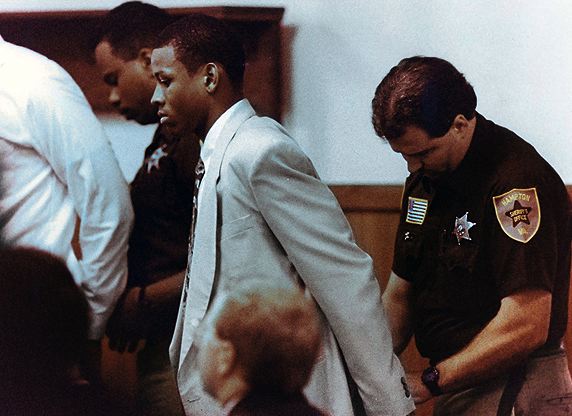
Allen Iverson bowling alley incident, John Singleton (who covered
Marion Jones' fall from grace), Ice Cube (
the Raiders' move to LA) and friend and fellow "30 for 30" producer
Connor Schell, and we talked about the documentaries, his upcoming 736-page
"The Book of Basketball," his career, why he's still watching "The Real World," and more.
Then this week, he turned the tables and had me as a guest on
today's B.S. Report, where we talked about fall TV, "Mad Men," Ted Danson, whether
Chelcie Ross has a defining role, and bunch of other TV stuff. A good time was had by all, except maybe for the part where I tried to encourage Bill to violate copyright law.
So if you need more Simmons and/or Sepinwall in your life, there's no shortage today, between the podcast and the mostly-complete transcript of our press tour interview(*), which is after the jump (and, like most of my
interview transcripts, pretty long).
(*) We went off on several tangents that I cut, including a debate about the merits of "Hung," which oddly came up again during the podcast, so I don't feel so bad about leaving it out.
Did you ever in your life think you would hear the phrase, "I have a question for Bill Simmons and Ice Cube?"
(Laughs) No, that was a highlight. I was very excited. Just to be on any panel with Ice Cube was a dream come true. The whole thing's crazy. Like, it kinda worked out. Living out here, you hear so many stories about a great idea, a great project, "I sold this script and it never made it." There's so many ways this could have gotten sidetracked or ruined or turned into something else, and it never happened. I've got this book coming out, and I'm more excited about "30 for 30" than I am about the book. You know, we're writers. Books are easy. I can sit down and it's going to take a while, but I know I can write a book. To navigate through the stuff we had to navigate, the degree of difficulty was a lot higher. So that's been cool.
You have connections through Jimmy (Kimmel) and your other friends. How much of getting these people (to make the films) was you, and how much was the power of ESPN?
A hundred percent ESPN. Initially, our vision was we get a couple of people. Once we realized we could have 30 filmmakers do all 30, we had to figure out how to talk people into it. It's not like we had a million kajillion dollars for each person, so we were hoping it would be a domino effect. And that's what happened.
The other thing that surprised me was how excited people were to talk shop and actually be involved. That was pretty early. Basically, everybody we went to got it immediately. They loved the part where we turned it over to them. Honestly, that was a big deal for ESPN. It's a big company, there's a lot of executives, and everything's done by consensus. To basically say, 'These people are in charge, and you can give them notes, but they don't have to listen to you,' that was the biggest obstacle.
You talked in there about how a lot of the films ended up being stories you didn't know much about or were surprised you wound up doing. What was the one you knew the least about?
My memory's going anyway with stupid stuff, like trivia-type stuff. We had a lot of those moments. Marcus Dupree, when we were growing up, you knew Marcus Dupree, but you haven't thought of him in 20 years. The own goal was another one; that was a big one that just went away. That was one of the goals: how can we gravitate away from what would be typically done? We don't want to do the '80s Olympic (hockey) team. We want to do stuff that people haven't seen, to tell stories that have a beginning, a middle and an end, and are different. And somehow, it happened. We're not counting it down. I love the fact that we're not doing Tiger, or doing Title IX, or stuff that, in the past, they would have said, "You have to do this guy, and you have to do this guy." For the most part, we avoided that.
Was it hard to let go of the '04 (Red) Sox?
We still have five to go, so I'm hoping we'll get to do that. But it's funny: of the shortlist of ideas we started with, I don't think any of them made it except for one. I was sure we were going to do Doc (Gooden) and Darryl (Strawberry). That's a no-brainer. Len Bias, I thought was a lock. I thought the Dream Team was a lock. One of the initial ones I wanted to do was called "Four Days in October," the four comeback games against the Yanks, told through the eys of the players, and it just never worked out.
I'm glad.
You're glad that didn't work out?
Well, I want to watch all of these, and I don't think I could sit through that one.
That's going to be the test: can we get people to watch each one, and not just pick (certain) ones? You know, "I'm out on this one, I don't care about soccer." We want people to watch each one. The big appeal, something that nobody's seen before, is that each one's going to be different. That's the rut I think HBO's gotten into. Well, there's a lot of ruts they've gotten in.
Liev Schreiber and all that.
Same narrator, it's done the same way. It's very predictable. I thought the Ted Williams one was really good, but why do it? It's 2009, the guy's been dead for six years, there's a huge book about him -- really, that's your choice? I just think they're dropping the ball a little bit, and we're taking the ball and dunking it, and we're going to blow them away about this.
It occurred to me watching the clip reel that you've got two different documentaries with Patrick Ewing as a key figure: the (Reggie) Miller one, and the day in 1994 (when the Knicks-Rockets Game 5 telecast of the NBA Finals was disrupted by the cops chasing O.J. Simpson in his Ford Bronco).
True, and we almost had a third one about the John Thompson era that I don't think ended up happening. Ewing was just lingering all over the place.
And if you'd done the Dream Team, you would have had four.
Yeah. I'm not gonna count out the Dream Team. I'm still holding out hope, because that's the one I want to do the most. The most interesting one we came up with was the one we came up with in the room, which was that day, June 17, 1994. We had the assumption with OJ, we didn't have to do one about him, but it would have been nice. And we thought, what angle is new? And we just gradually, over the course of an hour, realized that all these things happened over the course of a day. There were, like, 10 things. That was pretty cool. I love anything where I'm in meetings with people and throwing out (stuff) because we're writers, we're in front of a laptop all day, so it's fun to actually come up with (stuff).
So I'm assuming, given what a big NBA junkie you are, you were in front of the TV watching Knicks-Rockets that night.
Yeah. And I really think that was the defining moment of that decade where everyone knows where they were. They know who was around them, what room they were in, what happened that night. And it's been 15 years, and nobody's really approached it in a documentary. So we have a couple of those moments. The Ali-Holmes movie was like that. I'm really glad we were doing that, because for kids like me at the time, that was really traumatic.
And that one was kind of gift-wrapped for you, because the Maysles brothers had already shot so much of it.
That was unbelievable. Ali-Holmes was on our initial list of "I hope we get to do these," and to have him say, "Oh, we did a whole documentary on that once," that's when I thought, "Maybe this is going to happen." It just seemed like the stars were aligning in the right kind of way.
October's a very big month for you. This debuts and the book comes out.
Yeah, within three weeks of each other. It's crazy. I don't know how it worked out that way. The day my book comes out (Oct. 27), the Allen Iverson one is going to run that night, I think. That's the one I have the highest hopes for. It's a really important story, and culturally it's a really significant one. So it's weird it's coming out that night. (NOTE: After we spoke, the schedule switched around a bit, and now the Ali-Holmes film will run that night, while "No Crossover: The Trial of Allen Iverson" will air sometime in 2010.)
And it's by Steve James, who's a genius.
What's interesting is, his name really carries a lot of weight. The list of names is pretty cool. But for the average person, they don't know who Alex Gibney is. But then you say, "He did the Enron movie," and they'll go, "Oh, that was a great movie." So some of these guys don't have the name recognition. I'm excited for them. This is great. Jeff Zimbalist, the guy who did the Escobar movie.
What can you tell me about the book? You're always vague about it when it comes up on the podcast.
The basketball book? It's about the NBA, kind of about how we got here, and the people that mattered more than you think, and the people that mattered not as much as you think, and basically trying to figure out every question you would have. It's a little ambitious.
So is it structured as a narrative? Or are there different segments: "Here, we're going to talk about this"?
The heart of the book is trying to figure out who the best players of all time and the best teams were. And all the other chapters are leading up to that. I just don't think you can figure that out without a context. What's that context? That's what I spent way too many pages trying to figure out. How do we judge players? What's the real way to do it? Is there a common thread? What are the secrets we can learn from people like (Bill) Russell and the Jordan Bulls, and is that something that can be applied to other things? It probably could have been two books, but for me, I just feel like it's not like reading a Tom Clancy novel where you have to read it in five days. It's like one of my columns, where you can go here, you can go there. I think it's going to be visually stimulating, because there's going to be footnotes. I just think it's different. You can kind of compare it to "The Bill James Historical Baseball Abstract," but it's a lot raunchier, it's a little more argumentative. He was basically just dealing with stats, where I was dealing with things like the Russell-Chamberlain thing, where - you'll like this - I compared it to "The Sopranos" vs. "The Wire." Like, I can't prove "The Wire" is better, I could argue it and go crazy and punch you in the face until you believe me, which I probably would, but I can't actually prove it. But with the Russell thing, you can actually prove he was better. That's the stuff that interests me.
I guess the basic theme would be that history does weird things to the way we remember anything, whether it's a movie, somebody's career. I was reading something about John Cazale recently. He went five-for-five - those ("The Godfather," "The Godfather Part II," "The Conversation," "Dog Day Afternoon" and "The Deer Hunter")) were five Academy Award-winning films. Nobody talks about him ever, he's basically Fredo now. But at the time he was on the level of DeNiro and Pacino, and now those guys talk about him like he was the best out of all those guys. Why did Pacino and DeNiro endure when he didn't? Well, one reason is that he died. But also that they made other movies, and they became perceived as something they totally weren't. Pacino's made two good movies in 20 years, you know? But people still think he's up here, and he's not. I think there are a lot of basketball arguments that are like that, too.
That's my long answer.
Cazale also played the weak one, which would have made it harder to jump to being a star even if he hadn't died. It's much easier to be typecast as Fredo than it is as Michael.
You take someone like Michael Douglas. I don't think people would think he was one of the best actors of the last 25 years. But actually, you can make a case that he was. You look at his IMDb, and this guy was probably the most commercial actor (of the time) other than Harrison Ford, and has been in the most big movies, and been the most reliable. But nobody would ever (think that). That's what the book is about: twisting how people think, and the best example I would use was the Oscar Robertson triple double thing, which is just stupid, and now it's attached to him. "Well, he averaged a triple double, so he must have been the best!" And actually it wasn't that impressive.
You've been working on this book a long time, but during the time you've been doing it, you've had to cut back on your column writing. So there's been this long period for your fans where you've become much more of a podcaster than a writer, but you know you're still a writer.
I think people will realize when they see this book, it's not like I stopped writing. It's probably like a year and a half worth of columns in the book, whatever that workload is. For me, I've written a lot of columns. I think it's easier for somebody - I don't want to say easier, but like what you're doing, you're always going to have new TV shows, you're reacting to what's happening right there and stuff like that. To me, I take a slightly different approach to the sports scene. I don't want to write a Ben Roethlisberger civil suit column. I don't want to write easy columns. I'd rather write about stuff I'm not seeing other places. I guess I'm just picking my spots better. I don't think it's a great idea to overwhelm people with 20,000 words a week, anyway. I did that once upon a time, and I don't know - I'm getting older, I'm picking my spots more.
So even though the book is done, you're not necessarily going back to the circa 2004 schedule?
I would say no, only because my life is a lot more complicated. I'm doing stuff like this "30 for 30" stuff. I'm doing more for the company. I'm probably going to write a third book. I really like writing books. I don't know how much you deal with this in a newspaper, but I like the idea of writing stuff and not having to turn it in right away. Having the whole day to spend with it and then going back to it tomorrow and looking at it and going, "Maybe I should do this." I think with what we do, sometimes you can't do that. Sometimes, you're maybe not handing in first drafts, but you're handing in a draft that if you'd had four days with it, it would be better or different. That's kind of the mode I'm in now.
Well, the podcast is one of my regular rituals.
I didn't know that. Thank you.
I even listen to the stupid reality TV ones, and I don't even like reality TV for the most part.
Good. The podcasts for me are fun to do. It takes an hour, and I try to have a conversation with people over interviewing them, and try to let them do their thing. It's a new medium, and it's still coming together, it's been fun to be kind of on the front of it with some other people. Now you're talking about cars maybe getting internet. I think it's going to be a bigger medium than people realize. But for the guests, they love it. I had Peter Berg on 8, 9 months ago, he just loved it. He's used to being on a talk show for five minutes, and you're just getting warmed up and you're done. I think the guests have a good time.
And you don't have to play to a general audience. He goes on a talk show and he has to spend half his five minutes explaining what "Friday Night Lights" is. Here, you can really go into the nitty gritty of it.
I don't know how much I do this, but when I started the podcast, the rule was that they should be 20 minutes. (I was told) people didn't have the attention span to listen longer than that, and that's just how people did them. And I didn't understand that. Why wouldn't they listen to it for 45 minutes? I know a lot of people who commute, it takes them 45 minutes to drive to work. If you're on a treadmill, you usually do 45 minutes, so why couldn't it be (that long)? I always approach it from that. I kind of figured out the portability of it pretty quickly, once I started getting e-mails: "So I was at the gym listening to your podcast..." "Really? You were at the gym? That's interesting." Or "We were driving to San Francisco and we loaded three of your podcasts." I think that's what people aren't seeing: it's that radio on demand part. I really like it, but I'm not good at hosting it. I used to be bad, and now I'm half-decent.
Let me play devil's advocate for a minute. The podcasts are really good, the "30 for 30" clips we just saw looked amazing, and the book sounds interesting, but what would you say to the old-school Sports Guy fan who's saying, "I miss the guy who was writing these columns all the time for Page 2"?
Oh, he's coming back. I love writing columns. For me, this book, it was really tough to do both. And after I finished it, I hadn't really had any time off from writing in two years, so I've been trying to refuel this summer. But I still love writing columns. It's one of the reasons I left (ESPN) The Magazine: I just love the Internet and I love being able to react to stuff, and not having word counts, and I love that I did this "Almost Famous" column that was 11,000 words and was ridiculous. I don't know; it's just cool. We're still coming up with collective ways that this is interesting. I'm sure you feel the same way: you're trying different things, and it's fun.
Yeah, and every now and then, they like to run something I did online in the paper, but I have to go in and chop out half of it to make it fit.
I read, I think it was one of your season-ending "Lost" summaries, and I said, "I like this. This guy (really) got into it." And, yeah, there's an art to doing shorter stuff, and an art to word counts, but the whole word count thing has always bugged me. We had word counts because there's a limited amount of space (in print). That's why: you had newspaper and you only got this little part. And that doesn't mean you have to write a 7,000-word column, or a 900-word column; a 1300-word column might be the best, but how do you know? I just think it's cool.
Do you remember off-chance how long your Giants-Pats Super Bowl column was? That didn't seem incredibly long and I got the sense you didn't want to deal with it too much, but it read really well.
I never have a length I want to hit when I start to write. If it's an essay, I never try to make it longer than 3,000 words (NOTE: This is actually about the length of the Super Bowl 42 column, which I checked after the fact), but if it's a mailbag, it can be 8,000 words or longer; it doesn't matter. I've gotten a lot better at editing myself . I've been going through some stuff I wrote in the early part of the decade, and I'm like, "Man, I could have easily chopped this out." You get better as you get older.
You're going to peak as a writer late 30s to about 45. That's why it makes me laugh when people say, "I liked you better when you were writing your Boston Sports Guy site." I'm like, "Dude, I have those columns. They weren't that good. I'm glad you think fondly of them, but I really didn't know what I was doing."
Not to get all Klosterman on you, but you've obviously improved and grown as a writer as you've gone along, but you're out here (in LA) now, you know a lot of famous people, you're watching football games at Jimmy's...
I'm there, like, three times a year. It's a source of contention with him, that I don't come as often.
...David Stern knows who you are, you interact with athletes in a way that you didn't when you were the Boston Sports Guy. How do you feel that part of your life has changed your writing - being more of an insider than you used to be?
I'm still not really an insider. One of the only sports friends I actually do have is the GM of the Houston Rockets, but he knows if he makes a trade I don't like, I'm going to rip it. With the Celtics, I have a lot of friends who work for the Celtics, and when I was criticizing Doc Rivers all the time, that caused some problems. My mantra from day one has been "Don't suck up to anybody, and don't pretend to like something that you didn't." And I've never done that. The one thing I can say is that the readers know if I'm recommending something, I really liked it. I'm not doing it because it was a favor to this guy, or I'm friends with this guy. But living out here and all that stuff - I'm older, I'm going to be 40 this year. I don't think I'm that guy anymore who was in the sports bar in my late 20s. I'm older. And living out here is easier for my job. Sports comes on earlier. I think if I was in Boston, I would be writing about Boston all the time, and that would hurt me. I couldn't live in New York. I love warm weather. I don't think it's really that big of a deal. If other people do, I can't help them.
You've always said you try to write from the perspective of the fan, but the fan isn't necessarily getting inside info from the Celtics front office.
True.
Whether or not you let that color your opinion, you still know stuff we don't.
Yeah, but my attitude is I'm still a fan. There are just doors that have opened up. I'm able to get more access than the average fan, but I'm still the fan. So how do I continue that evolution without actually - at the ESPYs I always get uncomfortable, because the ESPYs is a weird event anyway, because we're covering these guys and interacting with them. I really don't think it's a big deal. I still watch every Red Sox game, I still watch every Celtics game. I don't go to games as much, I think that's the one difference, but that's just because I'm older. Do you go to as many games as you used to?
No. Since my daughter was born, going to sports has dropped off the table.
My biggest challenge has been keeping my kids out of the column as much as I could, which I think I've done a good job of. It's trickled in a couple of times. But I made this mental list to myself in my 20s: "Don't be that guy who's like, 'Hey, my kid's T-ball game was great.' Nobody gives a crap." So there's been a couple of times I've worked it in, but overall, if you're in college or in your 20s, they can't identify with the dude who's got two kids. You don't want to play that up.
I don't know how closely you follow the demographic stuff, but is there still a sense that you're getting in a new audience, or is it that the audience is aging with you?
I think both things are happening. I have more readers than I did. Some are aging with me, but I'm getting people in high school. I'm still getting those people who are, like 14, 15, just getting into sports, and they go, "I like that guy. He talks about boobs!" And then I'm getting the older people who have kind of aged with me. In writing the book, I'm trying to service all of those people. I have a couple of dick stories in the book. I always want to take care of the 15-year-olds, because in 10 years, they'll be 25.
Well, in trying to service that audience, do you ever get self-conscious about making the '80s movie references?
I think about it all the time. "Karate Kid," I may have to retire. That was 25 years ago. But here's where I think it's fair game: if they're still showing it on TV. Recently, I was mentioning "Teen Wolf" a lot, and it was because it was on all the time and I was watching it. Musically, you can get in a lot of trouble with that. Fortunately, for me, I listen to a lot of music that's come out in the last 10 years. But there are certain signs where someone has aged past their audience. It's musical references, it's if I'm referencing "Animal House." "Animal House" is a great movie, but nobody's watching it anymore. TV shows, stuff like that, you have to be careful.
That seems to be one of the easiest sources of when people pile on (Chris) Berman, is how much he talks about the Eagles.
Obviously, I can't comment. But I think people have pop cultural experiences that affected them when they were teenagers through their mid-20s. But if you're still creating stuff, at some point, you've got to drop those references. I'm still shocked sometimes, for instance, I mentioned some movie or TV show, where a 29-year-old e-mailed me and said, "I don't get that reference." Like, (the original) "90210," nobody gives a (damn) about anymore, so I try never to mention "90210." On the other hand, I think it would be weird if I was constantly quoting "Gossip Girl."
Not to go off on a tangent, but you're still watching "Real World," which is basically watched by the same audience as "Gossip Girl."
"The Real World" is the franchise, though. I feel like I was in on the ground floor with "The Real World," and it's hard for me to cut the tie. I should, though. I'm not proud of it.
You sounded really resolved (on a recent podcast), and then (Dave) Jacoby talked you out of it in about two minutes.
I have a lot of convictions, and then people will turn me immediately. What's that show, "NYC Prep"? I hate myself that I watch that show, but I (freaking) love it. It's probably my favorite show of the summer.
Is it going to take your daughter entering adolescence before you finally have to go, "Wait a minute..."? What's going to be the tipping point?
The new thing I've been grasping is, "40 is the new 30." Even though I'm 40 biologically, I'm 30, so I can still get away with 5 or 6 more years. But, yeah, I think if my daughter was 15 and I was still watching "The Real World," that would be bad. But pop culture's changing. Look what's happened to TV. It's unbelievable. Connor (Schell, an ESPN executive who's also working on "30 for 30") and I were talking about it in the car on the way over. I said, "I've heard good things about 'Royal Pains.' Have you seen it?" And he was like, "Yeah, it sucked." And I thought this was one of the top shows of the summer, and you're telling me it sucks? We're just not producing good TV anymore, we've just given up?
Well, there's still that, there's still "Breaking Bad," there's still "Lost" for one more year. There may not be as much great stuff as there was a couple of years ago, but there's still... stuff.
I don't get it. There should be more stuff. I was working on this show for HBO. I had a deal with HBO to develop a show, and going through this whole process just made me understand, "Oh, this is why TV sucks." It's by consensus, and you're getting terrible notes. Honestly, not to bring it back to "30 for 30," but all you can do as an executive is (screw) up a show. You didn't hear David Chase say, "Yeah, I had this idea for 'The Sopranos,' and then Executive B came in, and he was brilliant." No, HBO left David Chase alone, and that's the part I don't get about Hollywood. Just leave people alone, let them have whatever vision they have, and fund it.
Is that one of the reasons you walked away from Kimmel? You said, when you came back, that you just missed the columns.
I missed my column. I couldn't do both. In 2003, I did this Mike Tyson segment for TV, I was on a rooftop with him, and the whole time I was thinking, "This would be an awesome column." That's when I realized maybe this wasn't right for me. I was thinking like a writer and not like a producer. I had to pick one or the other. I couldn't follow sports enough to write my column. It wasn't that I couldn't write both, but I remember writing this basketball column and thinking, "I'm talking out of my ass. I've watched three games this year." That's when I knew. But that was still the most fun 18 months I ever had. Just working on a TV show, starting it up, living on the wire of not knowing if we would get canceled. It was amazing.
Now he's established and basically left alone, out of the fray with what's going on with the other two (networks).
He's in a weird spot. He's definitely safe, and his ratings have actually gone up. But at the same time, you read these Conan/Leno articles, and he's kind of thrown in (at the end). He's getting good guests, he's doing the show he wants to do, but the media momentum hasn't gone behind him. It started to happen when the Damon and Affleck videos happened, and then...
Then I think the stuff NBC was doing stole whatever thunder he had.
The NBC thing really did hurt him. If you were going to talk about late night, that (Conan/Leno) was the conversation to have for a year, and it still is. That's all people are talking about. I just don't think the story of, "Hey, look at Kimmel! He's still here" is as exciting. When should have been canceled in the first week. I'm really proud of him.
So you wanted to get back to the column, but you did Kimmel, you tried the HBO show, and now you're doing "30 for 30" and you seem very happy doing it. What do you feel like you want out of a career at this point?
I don't know. I'm trying to figure that out. I've got a year left at ESPN (on his contract) and then I have to figure out what I'm going to do. I really like doing this. I like being in meetings and figuring out problems, and spitballing. This is why I'm afraid to do "PTI" or other TV for ESPN, because it's so easy. The same thing as having a radio show every day. I'm friends with (Erik) Rydholm, who produces "PTI," and he says the writers who do "PTI," it's like drinking Kool-Aid: "This is great! This is what you do all day?" I still feel like I have a couple of good years left for writing, and maybe do something else, but you get seduced. (Dan) LeBatard was a great (freaking) writer, and now loves doing his radio show and he doesn't even want to write. I'm like, "You're the only Cuban-American sports columnist, and you are a great writer. You should be writing!" I argue with him, but he loves doing radio.
And he's great doing "PTI," but you're right: it sucked that he was gone (from the newspaper) for so long.
He has a perspective that we need. So I worry about that. That's why I do the podcast: it's an hour, I'm out, it doesn't totally overpower everything else I'm working on, and I still get the taste of talking to people. I like dabbling in it.
But I really don't know what's going to happen, with anything.
Have you seen anything close to a final cut on any of the films yet?
The (Barry) Levinson one I saw was, like, 97 percent done. It was great. Rough cut of the Iverson, rough cut of the Jimmy the Greek one. I have the Gretzky one I haven't watched yet. They're all going to be good. It's not like we hired schmucks to do these. These are great filmmakers and they know what they're doing. But it was good for the bosses: ceding that control, but then to actually have the rough cut and see, "Oh, they did know what they were doing."
How's (Steve) Nash's movie?
Nash was one of the first people we signed. Nash wants to get into this whole business. He started a production company, and Terry Fox was a hero. He's from Canada, and we forget that here, because we don't care what happens in Canada, but that was the biggest story. I like that, probably the two biggest Canadian sports stories in the past 30 years are represented in this: Gretzky leaving (Edmonton) and Terry Fox. But that's what I like about this: that it goes in so many different directions. I love that we're doing (Michael) Jordan in baseball.
Though I'm assuming that Ron Shelton doesn't buy into your theory (that Jordan's baseball career was the result of an off-the-books suspension for gambling by David Stern).
No. Quite the opposite. I still believe in my theory. I even tackle it a little in my book, but he is totally for the other theory. Now that enough time has passed, it's really weird that he did that. That's what I like about some of those docs. I think people are going to sit down for the Jordan baseball one and say, "Yeah, this was weird. This was the best athlete in any sport deciding to play another sport."
What do you think about "Friday Night Lights" season four?
I'm excited for it, because the way they ended season three, I immediately said, "Holy (cow), I want to see season four." Because that's, like, the perfect set-up.
I was trying to weasel info out of Berg.
I can envision the entire season in my head right now.
It's going to come down to who they cast. They lost a lot of key people, and if you don't nail the casting, it's over. There have been good shows that just didn't get the cast right.
"Entourage" is an example of a show that didn't get the casting right but still kind of made it. But, man, they went 1-for-5... well, Kevin Dillon, and Turtle I'm going to give them a half, so two and a half for five. To think that the star of the show is Vince, and he's a bad actor?
The problem is, anyone who would be convincing as Vince would really be Vince. There's a reason Adrian Grenier is not a movie star.
But the E part. That show... They've geared it towards common people more than people like us who can pick it apart. From being around some people who are kind of in Vince's position, first of all, there's no entourage with three people. It's 12 or 15. And the (stuff) that goes on is a lot more interesting than what they represent in the show: the jockeying of who gets to be the lead counsel to the celeb, and people stealing money. And they don't tackle any of that.
Because it's a fantasy where everything works out perfectly.
The first season, I think I underrated a little bit when I wrote about it back then. Watching them again on HBO Comedy, they really did some good stuff in the first season, like the Britney Spears girl. That's the stuff I'm amazed they haven't dabbled in more.
She's on "Gossip Girl" now.
Leighton Meester. She has a sex tape. Big decade for her. But they missed an opportunity to have all these fake characters where you go, "I wonder who that is. Is that DeNiro?" And they just dropped it completely from that end. But hey, it's still on. They must be doing something right.
"Entourage" is a good example of how a network can screw up a show. They had a good first season, and then they ordered a million episodes of it from that guy (Doug Ellin), and that guy probably spent two years conceiving where those 13 episodes were going, and then it's, "How about 26 more by next July?" And he's in there, and that show they really should have let breathe.
Even "Sopranos" - and God knows I love "The Sopranos" - that show ran at least a year too long.
"The Sopranos" goes back to a point in my book about how we remember stuff. I should have compared "The Sopranos" to Reggie Miller. We remember every big shot Reggie Miller hit, but nobody ever remembers the dozens that he missed in big games. And he missed the last shot in a lot of big games that they played. Nobody remembers all the (lousy) episode they did about the parade. That was one of the worst hours of TV I ever watched. And the dream sequence in the desert - they had some awful moments, but nobody remembers. Now, you bring up "The Sopranos," and people go, "Yeah, when he took his daughter to college, that was great!" Even the ending, nobody talks about.
Where do you stand on the ending? I know Cousin Sal hated it and has complained about it vehemently to you.
I think any ending that you have where people's first reaction is that their cable went out, you've probably made a mistake. At least let's hear a gunshot, because I think he did intend to kill him. I was mad. Sal is still mad. You bring it up to him now, and he still gets really really pissed off, and unfortunately, I think it's part of the legacy. Did it have to be?
Alan Sepinwall can be reached at asepinwall@starledger.com
Click here to read the full post

 A quick review of "Run Ricky Run," the latest "30 for 30" film, coming up just as soon as I put on a wedding dress...